Don't Turn Routine Ear Maintenance Into Another Doctor's Visit
For parents who keep ending up in the same place — a waiting room — over something that started as a simple cleaning question.
You notice something in your child's ear.
Wax. Maybe a little buildup around the canal. Nothing alarming — just the kind of thing you know needs attention at some point.
And then the familiar sequence begins.
You reach for a cotton swab and immediately feel uncertain about it. You try to get your child to hold still and that goes about as well as it always does. You think about the ear-drop routine and realize you don't have what you need, and the whole thing takes two days anyway. So you do what you've done before: you decide this one probably needs a professional, you pull out your phone, and you start looking for an appointment.
Another trip. Another wait. Another bill — and a visit to a primary care office or clinic without insurance can run $40 to over $100, and that's before anyone has done anything complicated.
This is the part that never gets said out loud about ear care: the problem isn't always the wax. It's the way routine maintenance keeps escalating into something bigger than it needs to be.
Most of what parents deal with day to day — loose surface buildup, trapped water after a bath or swim, the general upkeep of a child's ears — doesn't require a medical appointment. It requires a better at-home routine. One that doesn't involve cotton swabs, irrigation setups, or a 45-minute round trip.
That's the gap Vacurio was designed for: the space between "I noticed something" and "I'm booking an appointment." Routine maintenance. At home. On your schedule.
Here's what's actually changed about how it works — and why it matters.

The Cotton Swab Myth: What You're Really Doing When You "Clean" Your Ears
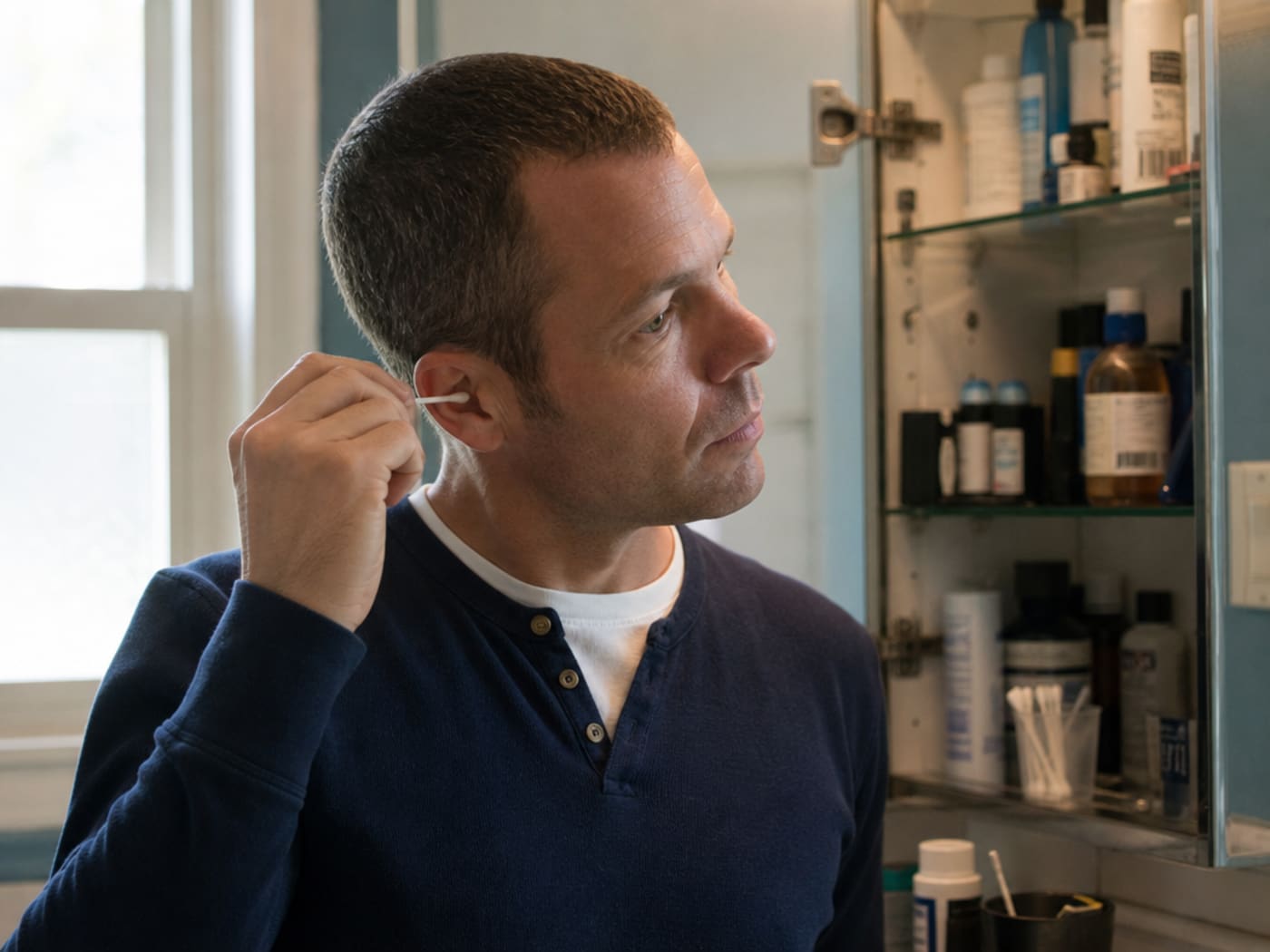
Most people reach for a cotton swab because it looks like a cleaning tool. It's soft. It's precise. It goes exactly where the problem seems to be. That logic makes complete sense.
The trouble is what happens once it's in the canal.
The ear canal isn't a straight tube. It curves slightly, and it narrows as you go deeper. A cotton swab, when it contacts wax sitting near the outer portion of the canal, doesn't pick it up the way a swab picks up moisture from a flat surface. Instead — because of the geometry of the space — it tends to compress and push whatever it contacts further along the canal, toward the eardrum.
Do that enough times and you've created a compaction problem that didn't exist before you started cleaning. You've also moved the swab across the skin of the canal wall repeatedly — skin that is thin, sensitive, and not designed for that kind of friction.
This is the mechanism nobody explains on the box. "Push the wax deeper today. Pay someone to deal with it tomorrow." That's not hyperbole. It's the clinical pattern that turns a routine cleaning habit into a recurring clinic visit.
Vacurio's design works in the opposite direction. Instead of inserting something and pushing toward the canal, the soft silicone tip sits at the opening and suction draws loose surface wax and trapped water outward. The direction of force is reversed. That's not a marketing claim — it's a mechanical distinction. A tool that pulls has a fundamentally different relationship with wax than a tool that pushes.
One note worth making directly, because it matters: Vacurio is designed for routine surface maintenance — loose, soft wax and trapped water. If wax has already been pushed deep and compacted, that's a different situation that genuinely warrants professional attention. The goal here is to avoid creating that situation in the first place.
Why the Water Routine Keeps Letting People Down
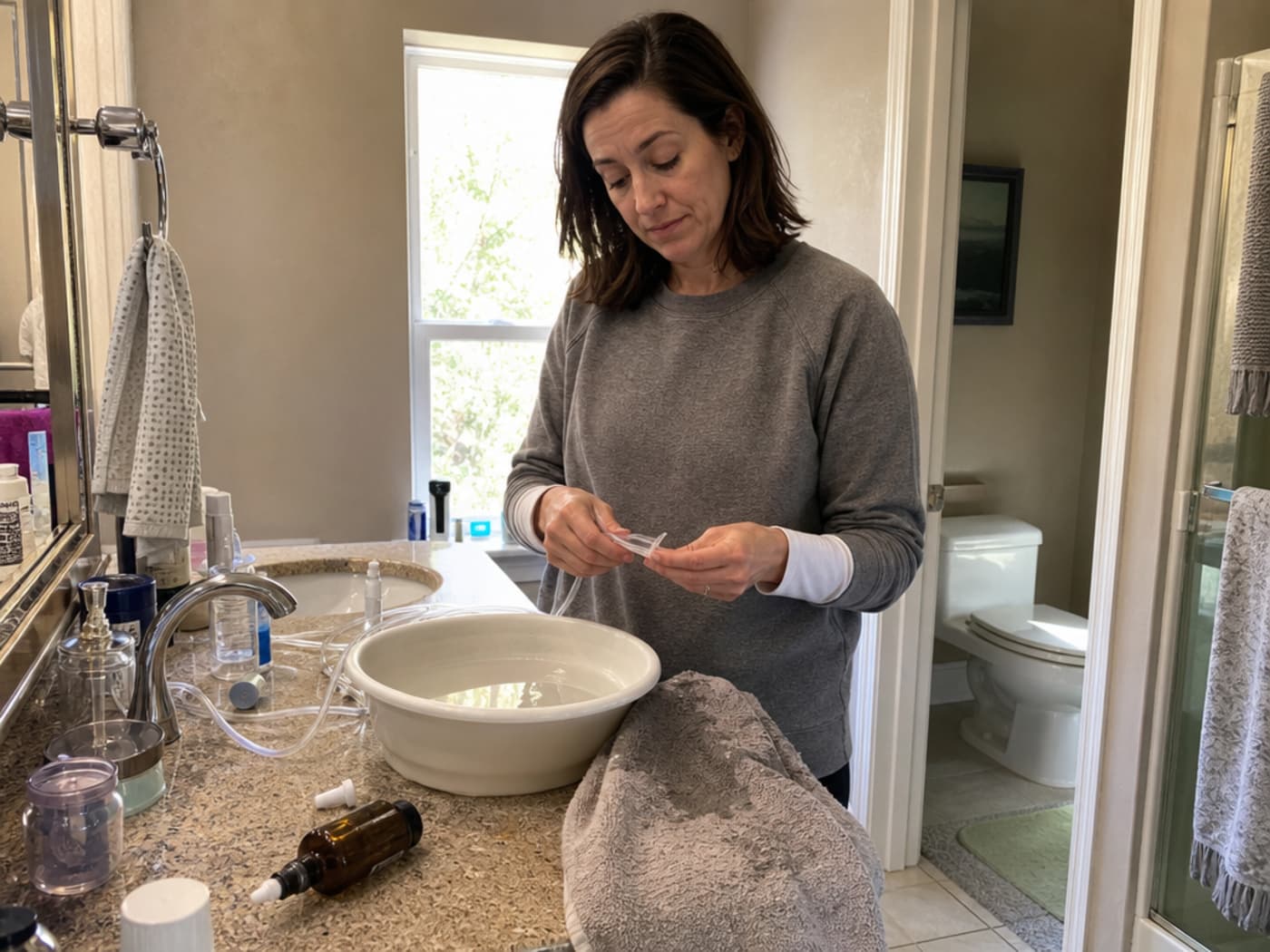
Ear irrigation — the drops-then-water method — is a legitimate approach when it's done correctly. Ear-care professionals use it. Home kits are widely available. And in the right circumstances, with cooperative wax and adequate preparation time, it works.
But the gap between "works in principle" and "works in practice on a Tuesday morning before school pickup" is wide.
The first problem is the preparation time. Softening drops typically need to be applied for one to two days before irrigation to have their intended effect. If you're dealing with a child who won't sit still, or an elderly parent who finds the drops uncomfortable, or yourself on a schedule that doesn't have slack in it — two days of pre-treatment is a barrier that quietly prevents the routine from ever starting.
The second problem is the water itself. Temperature matters: too cold creates real discomfort, sometimes strong enough to cause dizziness. Getting the angle right matters. Getting the water out afterward matters — trapped moisture in the canal creates its own set of problems. The whole procedure requires a setup that most bathroom counters aren't really designed for: a basin, the right temperature water, the right tool, a towel, and ideally another adult present when you're doing it on someone else.
The third problem — and this is the one that shows up most in the "failed routine" pattern — is that even when you do everything correctly, the water method doesn't always fully resolve the issue on the first attempt. So you repeat it. And the supplies run out. And the appointment gets scheduled anyway.
"Two days of drops. Warm water. A basin. A towel. There's a simpler routine."
Vacurio removes every piece of that setup. No drops required. No water involved. Three suction levels so the pressure can be matched to the situation — lower for a child or a sensitive canal, higher for more stubborn surface wax. Soft silicone tips. Cordless, so there's no cord to manage and no surface to set up around. The routine for the average use case takes approximately 60 seconds.
That's not a minor convenience upgrade. For parents who have tried to do this on a wriggling seven-year-old, or for anyone who has knocked a basin of irrigation water across a clean bathroom for the third time this year, the removal of the entire setup is the difference between a routine that actually gets maintained and one that keeps lapsing until the problem gets bad enough to justify an appointment.
If you're reading this and you recognize the pattern — the routine that keeps escalating, the appointment that keeps getting scheduled for something that feels like it should be handleable at home — here's where the full details sit: how Vacurio actually works, what it's designed for, and who it tends to help most. The rest of this piece walks through that.
The Mechanism: What "Gentle Suction" Actually Means
It's easy to hear "suction device" and imagine something aggressive — a vacuum pressing against the ear canal, uncomfortable or risky.
That's the wrong picture. And it matters to have the right one, because the mechanism is exactly why this approach is different.
The ear canal's outer portion — where loose surface wax and trapped water sit after a swim or a bath — is accessible at a shallow depth. The wax you're trying to address in a routine maintenance context isn't deep. It's sitting near the surface. And the reason it's problematic isn't usually its location — it's that nothing is drawing it outward. The ear does attempt to self-clean, but not always efficiently, and not always completely.
Vacurio's suction is calibrated specifically for this outer-canal maintenance zone. It isn't trying to reach deep into the canal. The silicone tips are soft and designed to create a gentle seal at the canal opening — enough to create the outward draw needed to lift loose wax and trapped moisture, not enough to generate the kind of pressure that could cause discomfort or harm.
Three suction levels exist for a reason: bodies are different, situations are different, and what works for a healthy adult ear differs from what's appropriate for a child or a more sensitive canal. The lowest setting is gentle enough for routine use on children. The higher settings are available when surface wax is more stubborn.
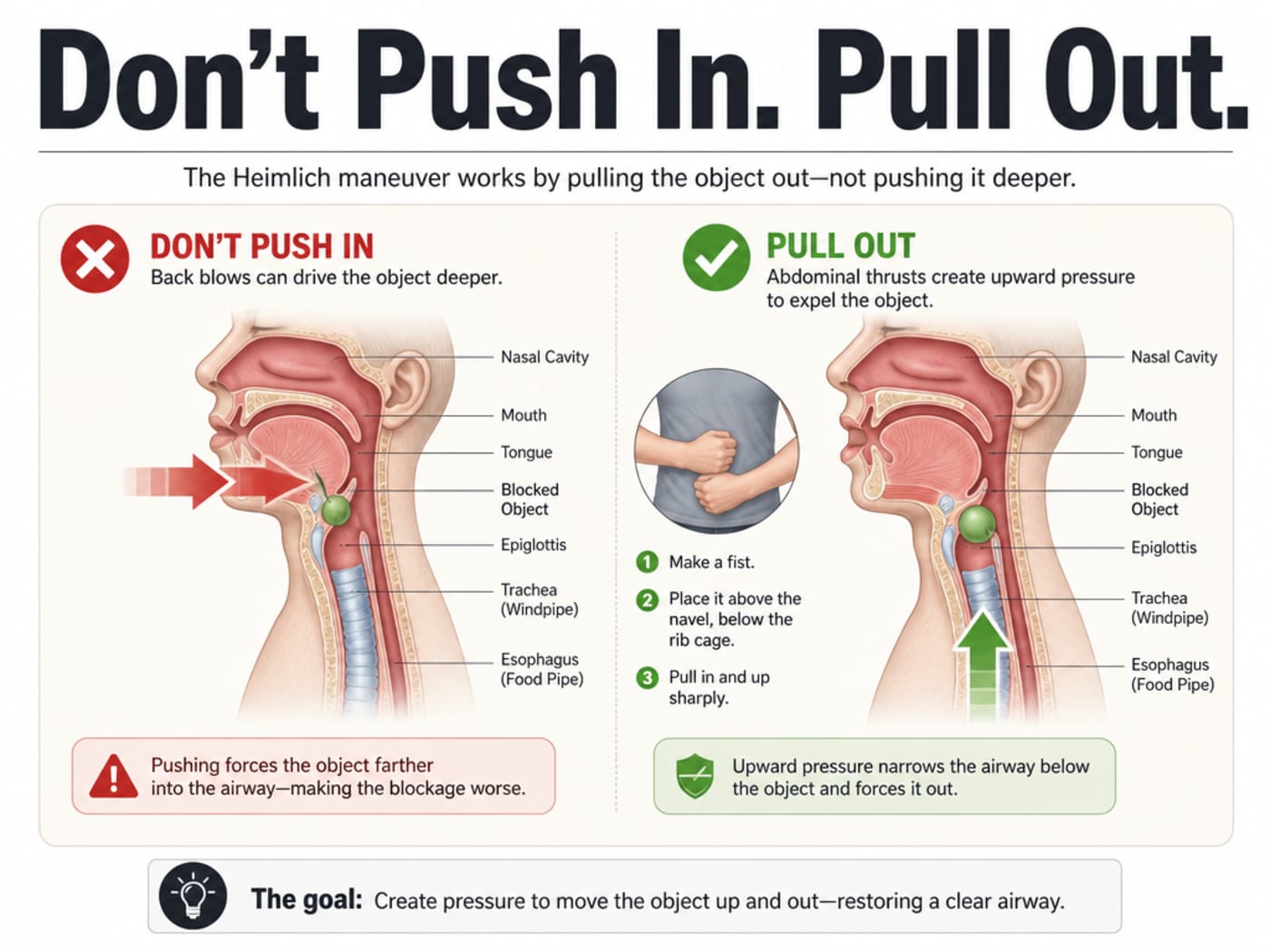
The mechanism is: don't push in. Pull out.
That direction of force is what separates Vacurio from cotton swabs categorically — not as a marketing frame, but as a literal physical distinction. The swab goes in and contacts wax; the suction device stays at the opening and creates an outward draw. One of those approaches has a documented tendency to compact and deepen. The other draws material toward the exit.
One use-session typically runs around 60 seconds. Cordless design means it can be used anywhere without needing to be near an outlet or managing a cord while leaning over someone else's ear. The device is small enough that it sits in one hand without grip fatigue — relevant for anyone managing their own ears in a mirror, or for older adults whose grip is less certain than it used to be.
The Real Cost: What Happens When Routine Maintenance Becomes a Clinic Visit
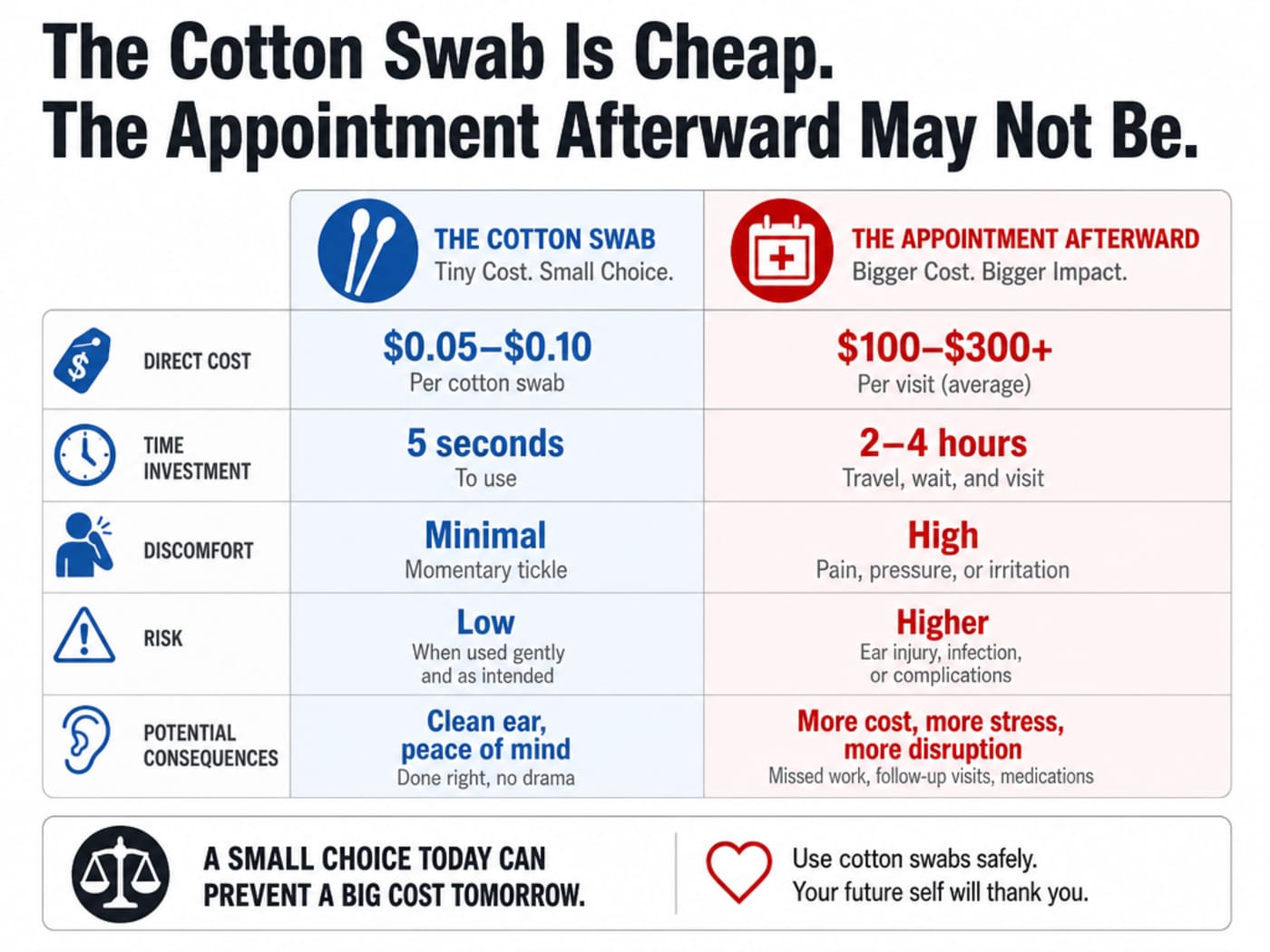
Let's be plain about the money side, because it's part of why this matters.
Ear-wax removal at a primary care office or clinic without insurance: $40 to $110 or more. A CVS MinuteClinic visit for ear-wax removal: $99 to $139. Those aren't worst-case numbers — those are typical range figures for a routine procedure.
If you're a parent who ends up taking a child to the pediatrician or a clinic two or three times a year because the home routine keeps failing — that's $80 to $300 a year in visits for something that starts as basic maintenance. If you're a senior on a fixed income making recurring trips because the cotton-swab habit has compacted wax to the point of needing professional removal, the math works out similarly.
The cost isn't abstract. It's a specific visit, a specific copay or out-of-pocket fee, a specific afternoon you didn't have.
And the part that sits underneath all of it — the part that's harder to put a number on — is the pattern. The appointment isn't a one-time event. It recurs. As long as the underlying routine at home is either not happening or is actively making the problem worse, the clinic visit keeps appearing on the calendar.
"The appointment costs more than you think. The routine may be simpler than you think."
Changing the at-home routine changes the trajectory. Not because Vacurio replaces medical care when medical care is needed — it doesn't, and that distinction matters — but because routine surface maintenance handled well at home is the thing that prevents the escalation from happening in the first place. The goal is to stay in routine-maintenance territory, not in impacted-wax territory.
That's the gap Vacurio occupies. Not the clinic. The space before the clinic becomes necessary.
Independence: Why the Routine Matters Beyond the Task

There's a version of this conversation that stays purely practical — the tool, the mechanism, the cost comparison — and that version is true and useful.
But there's another layer that doesn't get talked about enough.
When a routine task starts requiring outside help, something shifts. Not dramatically, not all at once — but consistently. The task is small. The shift isn't.
For an older adult who has managed their own health independently for decades, needing to call a daughter to help with ear cleaning is — on its face — a minor thing. But it doesn't land as a minor thing. It lands in a longer pattern, and that pattern has a weight to it.
For a parent, watching their child need repeated clinic visits for something that should be handleable at home creates a specific kind of frustration: the feeling of not being equipped to protect your own kid from a problem that isn't that complicated.
Both of those experiences point to the same underlying want: handle this yourself, at home, without escalating it into something bigger.
Vacurio's design addresses the practical barriers that make independence difficult here. Cordless: no outlet required, no cord in the way when you're working on yourself in a mirror or on a child in a bathroom. One-handed operation. Soft silicone tips that don't require precise positioning to be safe. Three suction levels that can be matched to the person and the situation. Compact enough to sit on a bathroom shelf without taking up significant space.
It fits into a normal morning routine. It doesn't require setup or cleanup. It doesn't require a second person.
"Your independence shouldn't stop at your ears."
That's not a tagline. It's the actual point.
What Customers Are Saying
"Really practical and easy to use. I'd been putting off dealing with my son's ears for weeks because the whole cotton swab situation felt wrong. This made it much simpler to actually keep up with at home."
Rachel M. — Portland, OR
"Well made, feels sturdy, and the three settings are genuinely useful. I use the lowest one for my kids and it works without any fuss. Beats digging around with a swab and hoping for the best."
D. Hernandez — Austin, TX
"I was skeptical but it does what it says. Quick, no mess, no setup. I'm 71 and I appreciate being able to handle this myself without asking my daughter to come over or booking yet another appointment."
Carol W. — Scottsdale, AZ
The Short Version, for Anyone Who Wants It
Most ear-care problems that land people in a clinic start as routine maintenance issues — wax that built up gradually, water that didn't fully drain, a cleaning habit that pushed things in the wrong direction one too many times.
The escalation is almost always avoidable.
Vacurio is designed for the maintenance layer: routine surface wax, trapped water, the kind of ear care that should be handleable at home without a two-day prep routine, a bathroom full of supplies, or a cotton swab that does the opposite of what you're trying to do.
What it addresses:
- Loose, soft surface wax — the kind that sits in the outer canal and accumulates between cleanings
- Trapped water — after swimming, bathing, or showers
- The cotton-swab habit — a push-in tool replaced by a pull-out mechanism
- The full water-irrigation setup — replaced by a 60-second cordless routine
- Recurring clinic visits for routine maintenance — reduced by having a functional at-home option
What it isn't: It isn't a treatment for impacted or deeply compacted wax. If the wax is already compacted to the point of causing hearing changes or significant discomfort, that's a clinical situation — and the right answer is still a professional. Vacurio's job is to keep you out of that situation in the first place.
Who it's built for: Parents managing their children's ear health at home. Adults who've been using cotton swabs out of habit and want a safer surface-cleaning method. Older adults who want to manage their own routine ear care independently. Anyone who's gone through the full irrigation routine and is ready for something that takes sixty seconds instead of two days.
If any of that describes where you are, the next step is seeing how Vacurio actually works — the full details, the spec, and what the routine looks like in practice.