Push. Pour. Wait. Repeat. There Has to Be a Better Way to Clean Your Ears.
You're not doing it wrong. You've just been handed a routine that was never designed to actually work.
There's a drawer in most American bathrooms that tells the whole story.
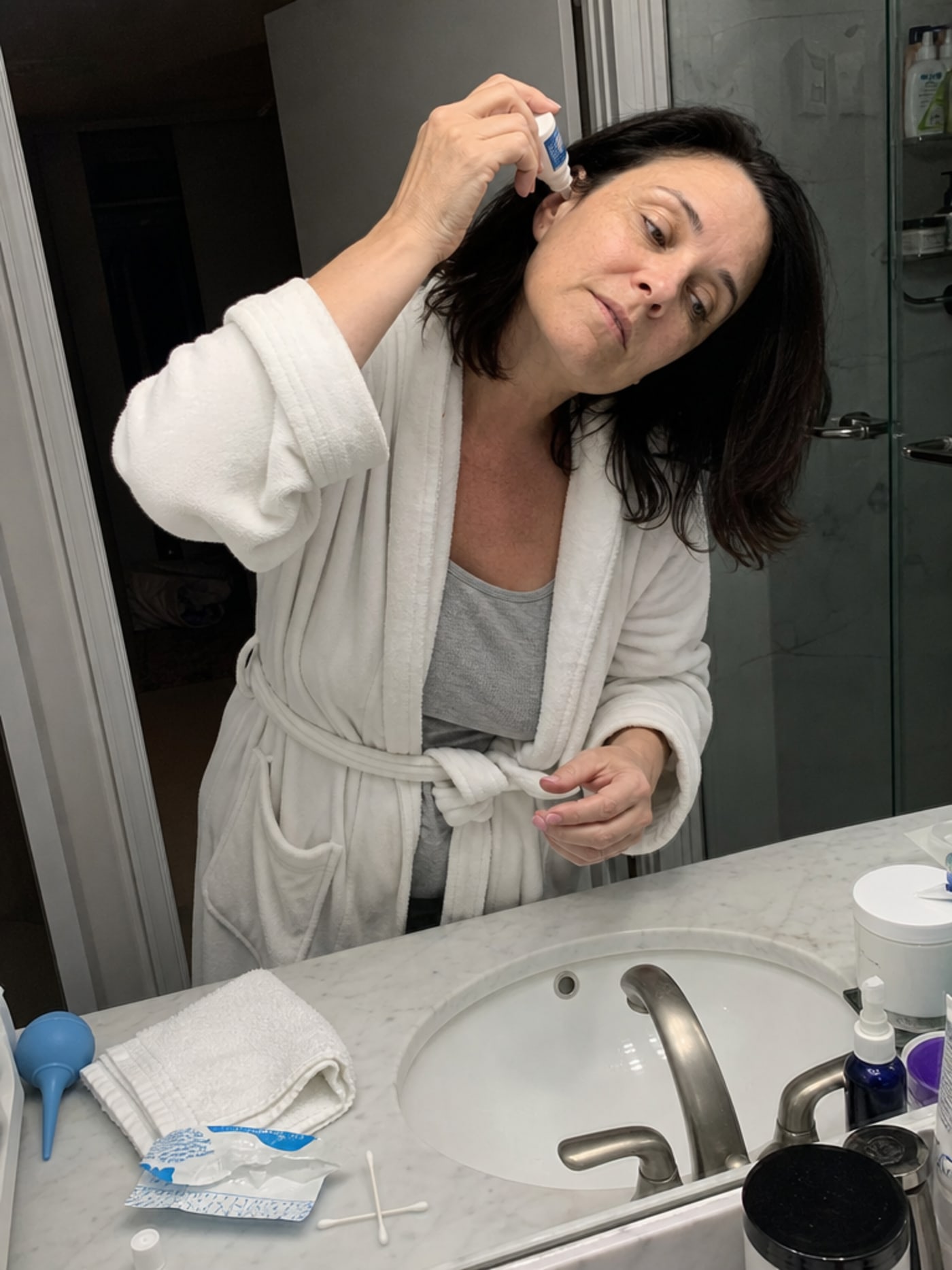
Cotton swabs. A half-empty bottle of ear drops. A small bulb syringe that seemed like a good idea at the time. Maybe a folded piece of tissue someone once suggested tucking at the ear canal opening after a shower.
None of it is embarrassing. All of it is the result of a completely reasonable person trying to solve a completely ordinary problem and finding that nothing quite solves it.
The cotton swab goes in, and the full sensation remains. The drops soften things, but then there's the waiting — tilting your head, holding still, wondering if anything is actually moving. The water flush helps sometimes, and then it doesn't, and you're back at the beginning. The whole process takes longer than it should. It requires supplies. It requires preparation. And a few days later, without any particular explanation, you're doing it again.
This isn't a hygiene failure. It isn't a sign that your ears are unusual. It's a sign that the standard ear-care toolkit was never built around the actual problem — which isn't that your ears need more to be pushed into them, or more liquid poured into them, or more waiting. The problem is that nothing in the routine is designed to efficiently remove what's built up.
That distinction — between a routine built around adding things to the canal and one built around actually pulling things out — turns out to matter more than most people expect.
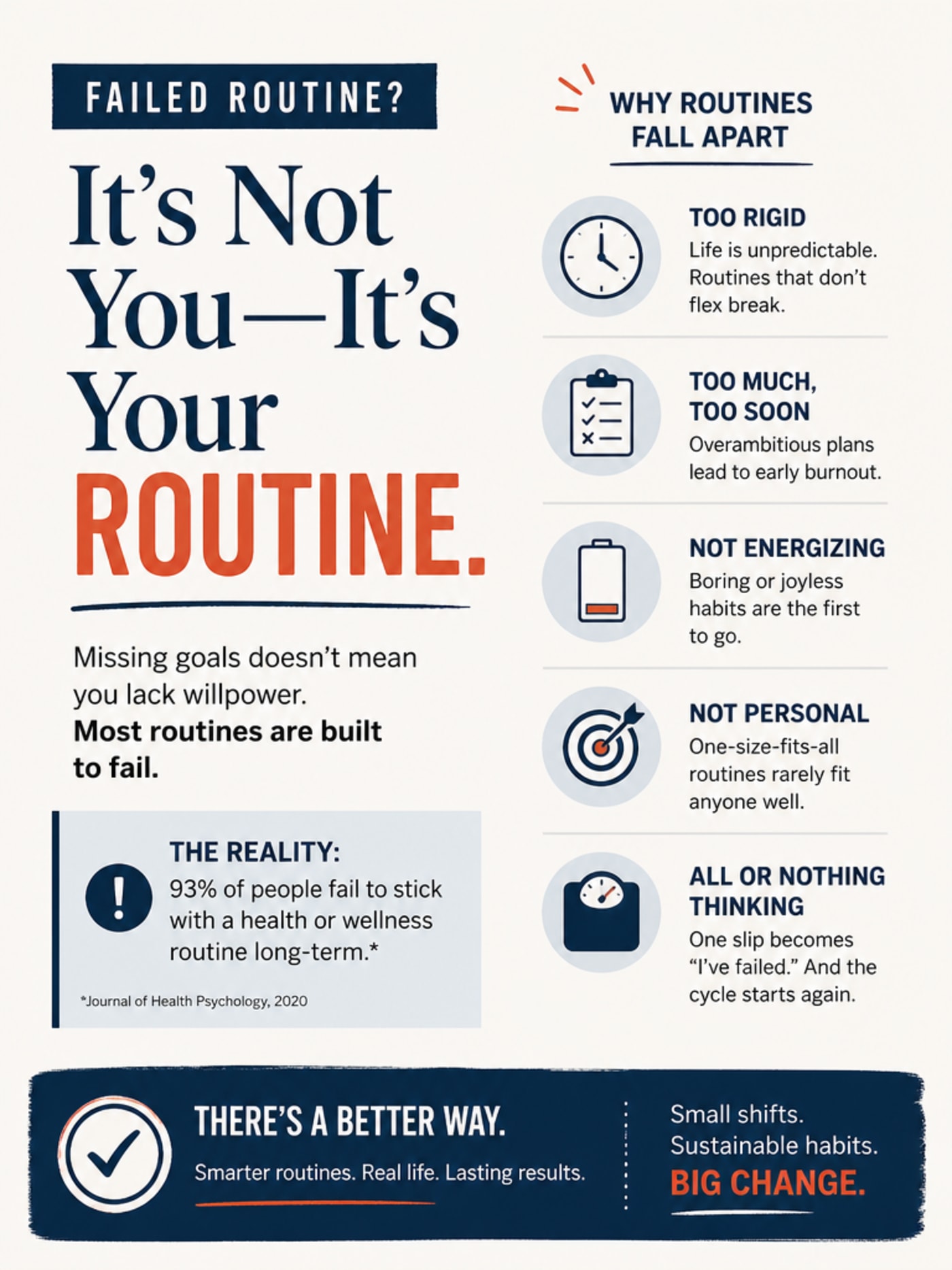
The Routine That's Supposed to Take Two Minutes Is Eating Your Morning
It starts simply enough.
You notice that familiar sensation — the slight fullness, the muffled quality that suggests something has built up or water has gotten trapped after a shower. So you reach for the cotton swab. You do the thing you've been doing since childhood. And you either feel no different, or you feel slightly worse, or you feel fine for a day and then notice the sensation is back by the following morning.
So you try the next thing. The drops. The instructions say to tilt your head, apply, wait five to ten minutes, then flush or let it drain. Five to ten minutes is a long time to stand over a bathroom sink with your head at an awkward angle before work. If you have the patience for it, you might feel some improvement. If you don't — if you have somewhere to be, as most people usually do — you do a shortened version and get a shortened result.
The water flush is more involved still. A bulb syringe, warm water at the right temperature, a towel, a basin, the careful aiming of a stream into the canal. Some people find this effective. Some find it uncomfortable. Most find it an unexpectedly large production for a problem they thought they'd handle in thirty seconds.
Here is what all three of these methods share: they are fundamentally about adding something to the ear canal. The swab adds contact and friction. The drops add liquid. The water flush adds pressure and liquid. None of them are designed around extraction. None of them are pulling anything out. They are moving things around, softening things, or compressing things — and then hoping the ear's own processes handle the rest.
For some people and some situations, that works well enough. For the people reading this — the ones who have tried all three and still find themselves cycling back through the same routine — it evidently doesn't.
There's a reason for that. And it has nothing to do with how carefully you're doing any of these things.
Every Tool in That Routine Is Moving in the Wrong Direction
There is a specific kind of frustration that comes from realizing the problem isn't your effort but your direction.
Think about what you're actually trying to accomplish when you sit down for ear care. You want to remove something. Buildup that has accumulated, water that has gotten trapped, material that has migrated toward the canal opening and is causing that blocked, full sensation. The goal is clear: get it out.
Now look at the standard tools. The cotton swab moves inward — it applies contact pressure toward the canal. Even when used carefully at the outer ear, the swab's entire mechanical logic is a push. The drops are poured in and sit inside the canal while they work. The water flush sends a stream of liquid inward before gravity or drainage handles the exit. Every single standard method begins by sending something deeper into the ear before it tries to accomplish anything.
The word for this is counterintuitive. You are trying to get something out by repeatedly putting things in.
This is not a manufacturing defect or a medical failure. It's simply that the tools in the standard bathroom arsenal were designed for a different task — or designed before anyone seriously asked whether there was a better direction. The cotton swab was designed for cosmetic surface cleaning. The drops were designed to soften. Neither was designed with extraction as the primary mechanism.
Vacurio approaches the question differently. The device uses gentle suction — meaning its core mechanical action is a pull, not a push. Rather than adding something to the canal and waiting for the ear's own processes to handle the rest, it draws loose, soft surface material and trapped water out directly. The direction reverses. The mechanism becomes consistent with the goal.
Three adjustable suction levels let you start gentle and adjust based on comfort. The soft silicone tip sits at the canal opening — it doesn't push inward; it creates a seal that allows the suction to work. The device is cordless and requires no water preparation, no pre-softening drops, and no basin on standby.
The mechanism won't feel radical. It will just feel like it makes sense.

"It's Just Earwax" — Until You Add Up What the Routine Has Cost You
"It's not a big deal," is a reasonable thing to say about a blocked or full sensation in your ear. It usually isn't a big deal in isolation.
The problem is that it rarely stays in isolation.
Consider what the routine actually costs over time. Not dramatically — just honestly. A box of cotton swabs used regularly, repurchased quarterly. Ear-drop solution, sometimes prescription, sometimes over-the-counter, replaced when it runs out. The occasional investment in a new ear-care gadget that seemed like it might finally work, then didn't. The time spent standing over a bathroom sink in a precarious head-tilt position, waiting for drops to do something, adding up across mornings and evenings and the inconvenient Sundays when the problem returns.
And then there are the appointments.
Most people with a recurring ear-care routine have, at least once, called a doctor's office because the home methods stopped working and the sensation became persistent enough to warrant professional attention. The visit itself is straightforward — an irrigation, a removal, a recommendation to come back if it continues. What it costs, between scheduling time, co-pays or out-of-pocket fees, travel and the hour of your day it occupies, is considerably more than the problem initially looked like it would.
This is the escalation pattern. A problem that starts small stays manageable until the standard routine fails to keep up with it, at which point the cost — in time, in effort, in money — quietly compounds.
Vacurio is positioned specifically for routine at-home maintenance: the category of situations where the sensation is familiar, the buildup is the surface, soft kind, or water has gotten trapped after a shower or swim. It is not a replacement for professional care when professional care is what the situation requires. But for the recurring situations that the bathroom routine is supposed to handle — the ones it handles inconsistently, at the cost of time and preparation — a different mechanism at home changes the economics considerably.
The question isn't whether the problem is serious. It's whether the routine you're using to manage it is costing more than it should.
The Reason the Routine Starts Over Every Few Days
If the routine were working, you wouldn't be repeating it.
That observation sounds obvious. It rarely gets stated directly. But it is the most practical diagnostic available: a method that fully resolves a problem doesn't need to be repeated on a short cycle. When you find yourself dealing with the same sensation within days of the last time you dealt with it, the honest conclusion is that the previous session didn't complete the job.
There are two explanations. The first is that the ear naturally continues producing wax as part of its normal protective function, so some recurrence is simply biology. The second — and this is the one worth examining — is that tools designed primarily to push things around rather than remove them may be leaving more behind than they appear to.
The cotton swab, used at the outer canal, contacts the surface. What it touches, it may move — inward, outward, or compacted into a different position. What it doesn't touch, it leaves. If surface material is present but the swab doesn't reach or contact it cleanly, the session ends with the sensation reduced but the root situation unchanged. The drops help soften material over time, but softening and removing are different actions. The water flush can dislodge and carry out material when the pressure and angle are right, and fail entirely when they aren't.
The recurring cycle isn't a sign that something is wrong with your ears. It's a sign that the tools in the routine are completing partial jobs, and partial jobs require repetition.
Vacurio's suction mechanism draws out what's accessible at the surface — loose, soft material and trapped water — rather than redistributing it. The result, for the situations it is designed for, is a more complete single session rather than a series of partial ones. The cycle doesn't break entirely — the ear continues to do what ears do — but the interval between necessary sessions can change when the method actually removes rather than rearranges.
This is also where the simplicity matters practically. A routine that takes less time and requires less preparation is a routine you're more likely to complete properly rather than abbreviate. The abbreviated routine is often what produces the partial result that starts the cycle again.

What a Routine That Actually Ends Feels Like
The goal was never a complicated ear-care routine.
Nobody decided at some point that they wanted a multi-step process, a drawer full of supplies, and a recurring appointment with the bathroom sink. The routine expanded to its current size because each new step was added to compensate for the previous one not fully working. The drops came in because the swab wasn't enough. The water flush came in because the drops weren't always convenient. The varied combination of all three came in because no single method was reliably complete.
What most people actually want is what they assumed ear care would be in the first place: something simple, something quick, something that actually resolves the sensation rather than managing it temporarily.
Vacurio is cordless. There is no water preparation required before you use it. There are no drops to apply and wait for. You select a suction level — three are available, starting gentle — press the soft silicone tip to the canal opening, and the device draws out what's accessible. The session is brief. The cleanup is minimal. There is no basin involved and no tilting your head over a sink at an angle your neck will remember.
For routine at-home maintenance — the situations the bathroom drawer was assembled to handle — the routine compresses to a single step. The supplies reduce to one device. The production value of the whole process drops to something that actually matches the scale of what you're dealing with.
The sensation of fullness, when it's caused by the surface buildup and trapped water Vacurio is designed for, resolves. Not as a side effect of a complicated process, but as the direct result of a mechanism that actually points in the right direction.
That is what the drawer was supposed to contain all along.

What People Are Saying
"I've been going through the same ear-drop and swab routine for years. Vacurio is genuinely simpler — I actually use it consistently now because it doesn't require all the setup."
— Rachel M., Portland
"The suction levels are a nice touch. I started on the lowest and it worked fine. Counter stayed clean, no tilted-head awkwardness. Practical and well made."
— James T., Austin
"Bought it skeptically after one too many annoying mornings with the drops routine. The concept makes sense once you think about it — you're trying to get something out, not push more in."
— D. Holloway, Chicago
You've Already Run This Routine Enough Times to Know It Isn't Working
The drawer is full. The steps are familiar. And tomorrow morning, when the sensation returns, you'll be back at the sink choosing between the same options you've been choosing for years.
That's the real cost of staying with the current routine — not one bad session, but the sum of all the sessions ahead of you that will play out the same way. The cotton swab that moves things around. The drops you have to wait for. The water setup you abbreviate because you don't have the time to do it properly. The partial results that start the cycle again.
There is a device built around a different mechanism. It pulls instead of pushes. It requires no liquid preparation. It has three suction levels and a soft silicone tip that sits at the canal opening rather than pushing inward. It is designed for exactly the situations your current routine handles inconsistently — routine maintenance, trapped water, loose surface buildup.
The mechanism is simple. The direction is different. The routine finally ends.
What changes when the routine actually works:
- No more multi-step setup before a task that should take two minutes
- No more waiting for drops to do something while you stand over a sink
- No more reaching back into the same drawer because the last session didn't finish the job
- A single cordless device instead of three products that partially compensate for each other
- A routine that takes as long as it should — and actually ends
The people who keep dealing with this are not dealing with it because their ears are unusual or their technique is wrong. They're dealing with it because none of the standard tools were built to pull. This one is.
(That click costs nothing. Another morning with the same drawer might.)