Your Next Recipe Is Already Dead. The Store Doesn’t Carry That Flour.
You already bake like it matters.
Starter on the counter. Favorite hydration in your head. A pizza night people actually request. A loaf you are quietly proud of. You are not looking for a hobby. You are looking for more to work with.
Then a formula shows up that wants more rye than “bread flour.” Or a wheat-and-spelt dough. Or a house blend that does not exist as a SKU.
Suddenly your experiment is a shopping problem.
The store has two dusty specialty bags, if you are lucky. Online wants a five-pound sack of a grain you have never even smelled. You buy it. You use a cup. The rest sits in the pantry, going stale, charging rent.
That is not a talent problem. That is a supply problem.
The bakers who never run out of ideas stopped starting with a bag. They pick compatible whole grains, mill what this bake needs, and make flour that was never on a label.
GRAIN BLOOM is the countertop mill that puts that step in a normal kitchen — without pretending you need a $400 “serious” machine to start exploring.
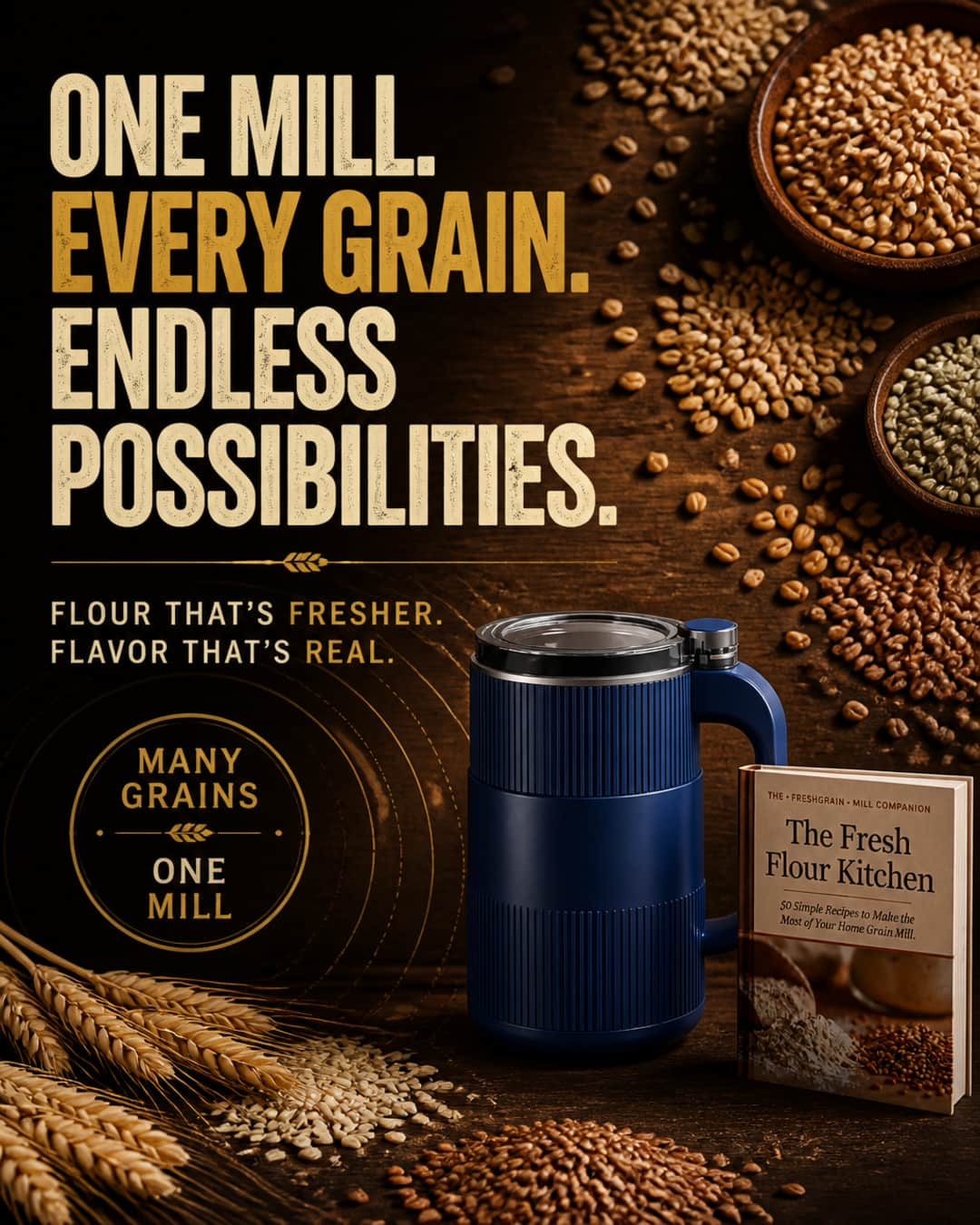
Stop Following Bags. Start Inventing Flours the Aisle Will Never Stock.
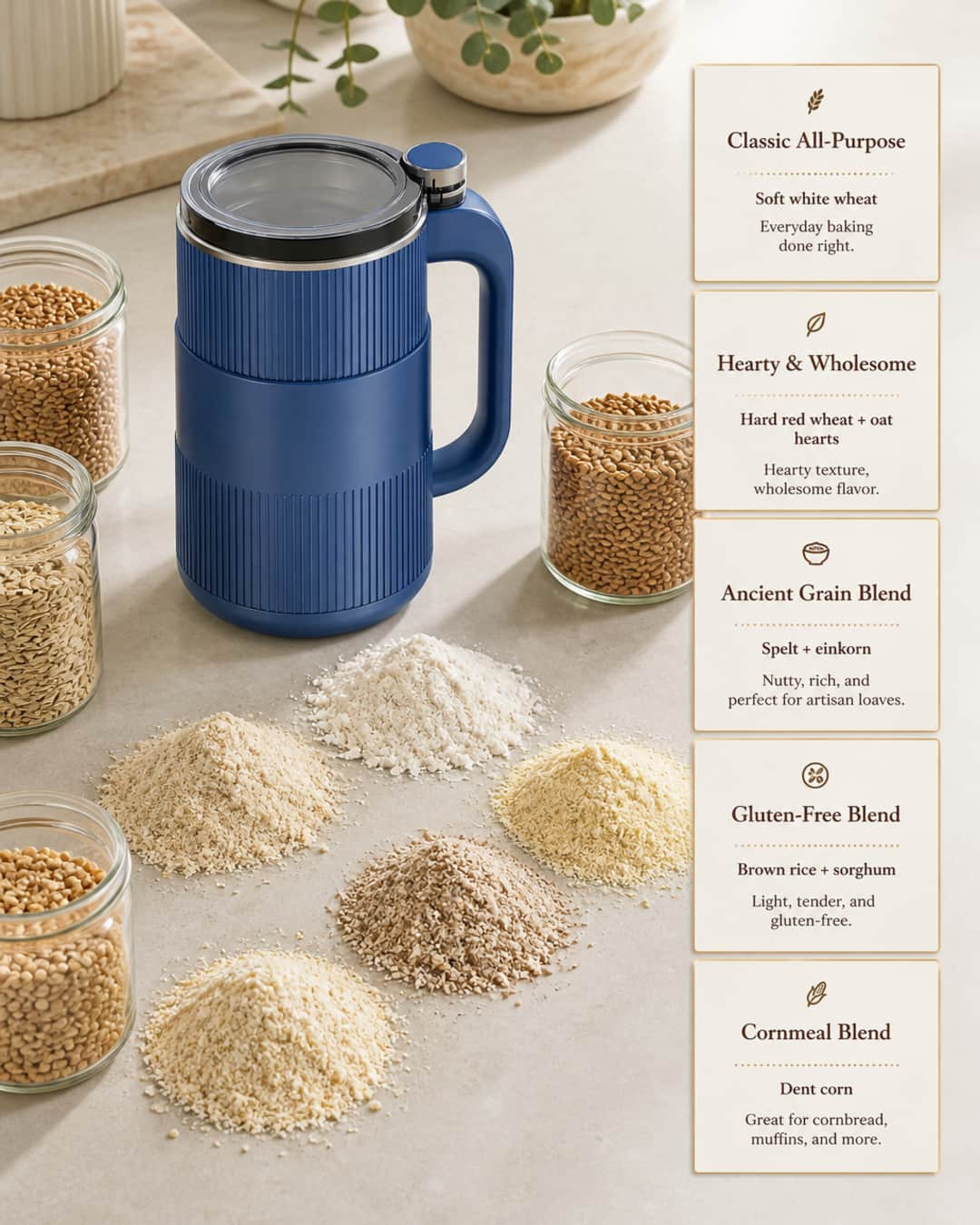
Recipes are public. Flour blends are not.
Every interesting loaf you have ever eaten started as a grain decision: how much rye for bite, how much wheat for lift, whether something nuttier belongs in the mix. A commercial bag freezes that decision. You get their blend, their grind, their idea of “rustic.”
You are not supposed to invent. You are supposed to repurchase.
That is a stupid ceiling for someone who already treats baking as a craft.
Imagine opening jars of whole grains instead of another paper sack. Measuring what this dough actually needs. Combining compatible grains in proportions you chose — not proportions a mill in another state chose last season.
Not following the bag. Building the flour.
The experiments bakers actually want look like this:
- A wheat-and-rye rustic sourdough with more rye than any grocery “blend” will give you
- Spelt-and-wheat pizza dough that is not hiding inside a $12 “ancient grain” mix
- A hearty custom artisan loaf you can tweak loaf by loaf
- Side-by-side small-batch combinations — same day, two jars, two doughs, a real comparison
- A signature house blend that exists in your kitchen and nowhere on a shelf
Those are not store SKUs. That is what happens when the mill sits next to the mixing bowl.
GRAIN BLOOM is for that moment: whole grains in, flour into the recipe you are making tonight. Grain compatibility and grind still have to match the bake — you mill what the mill can handle, you test small, you pay attention. The point is no longer “which bag did they stock.” The point is which grain you wanted to try.
You Shouldn’t Need a Five-Pound Bag to Taste One Cup
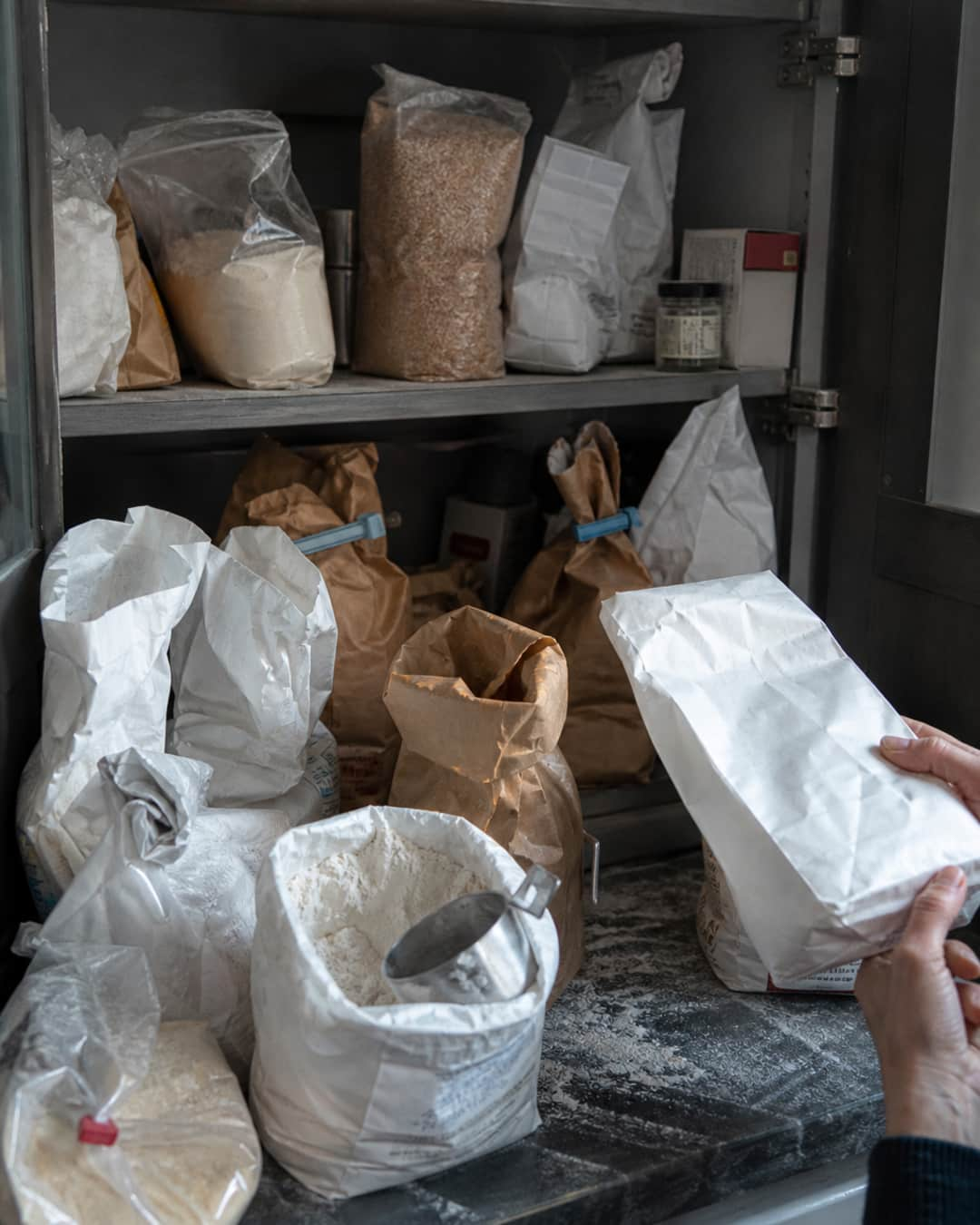
Adventurous baking has a stupid tax.
You see a rye percentage you have never run. You do not need a winter’s supply. You need enough flour for this dough.
The market disagrees. Specialty flour arrives in bags sized for a bakery, priced like a treat, leftover like a punishment.
So the pantry fills up:
- Half a bag of something you used once
- A “I’ll get back to this” rye that has been open too long
- Another impulse bag because the last experiment was not quite right
You are not wasteful. The packaging is.
Home milling changes the unit of commitment. Keep compatible whole grains on hand. Mill the amount the formula calls for. If the loaf is a dud, you learned something — without another orphaned bag staring at you from the shelf.
That is the difference between experimenting and accumulating.
GRAIN BLOOM’s job in that picture is simple: it is the mill you can put on a normal counter for $79.99, not a several-hundred-dollar machine you have to justify before you have even tried a second grain. Batch size and grain support still have to match what you mill. The offer is the chance to stop buying a whole specialty bag every time curiosity hits.
One recipe. One jar. One mill. Not another five-pound commitment.
You’ve Tweaked the Recipe for Years. You Still Haven’t Changed the Grain.
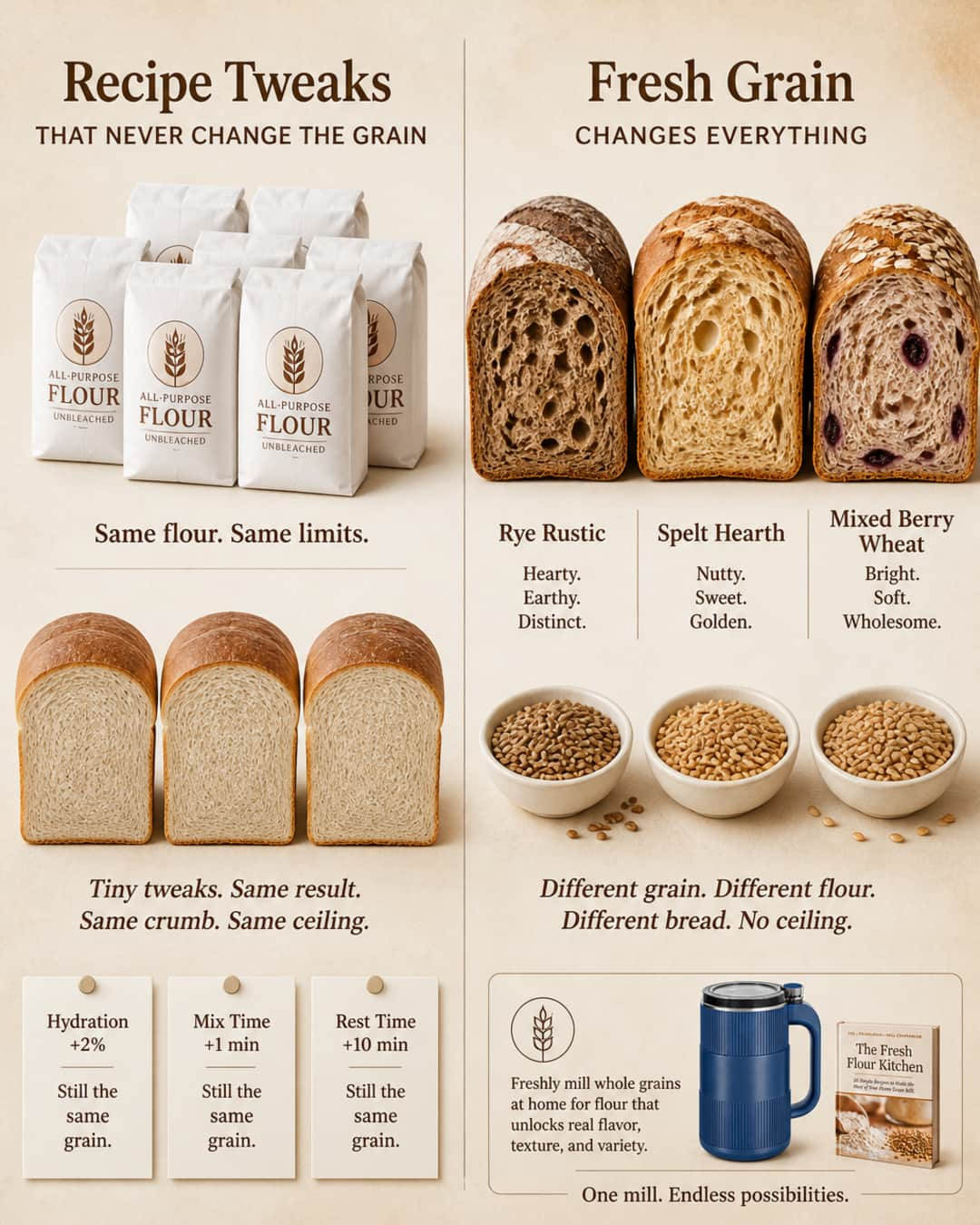
Bakers love to think they are experimenting.
New autolyse. New Dutch oven. New scoring pattern. New hydration. Same all-purpose. Same “bread flour.” Same aisle.
That is technique variation. That is not ingredient variation.
Rye does not bake like wheat. Spelt does not smell like supermarket white. Different wheat varieties do not ferment like each other. You can spend three years on sourdough and still have only met one grain.
The leap is not another cookbook. It is asking what happens when the flour changes.
- What does a rustic sourdough do when rye actually shows up in the mix?
- What happens to homemade bread when you mill spelt instead of grabbing “wheat”?
- What does a small-batch dough feel like when you try a grain you have only read about?
- What if you ran the same loaf against two wheat types and tasted the difference instead of guessing?
- What if aroma and crumb became variables you could choose — not accidents of whatever bag was on sale?
Those questions do not get answered in the baking aisle. They get answered when you mill compatible grains yourself and bake the result the same day.
GRAIN BLOOM is how that question gets into a regular kitchen. Not as a promise that every grain on earth will mill perfectly in this machine — it will not, and you should only mill what it can handle — but as a $79.99 way to stop treating “flour” as one anonymous white powder.
You have already changed the recipe enough. Change the grain.
What Home Bakers Are Saying
“I was tired of buying a whole specialty bag just to try one loaf. Having a mill on the counter makes small experiments feel practical.”
Maya, Portland
“Clear and easy to use. Grains in, flour for the dough I’m making that night — useful without feeling complicated.”
R.T., Austin
“Helped me stop treating flour as whatever the store had. I still test small, but the process isn’t overwhelming.”
Elena, Minneapolis
The missing variable was never the recipe
The bakers who look endlessly creative are not more talented. They have more raw material. One mill. Compatible grains they chose. Permission to stop shopping for someone else’s blend.
If baking is already your craft, the next variable is not another pan. It is the grain.
GRAIN BLOOM is for people who:
- Are done letting store selection cap the formula
- Hate buying a whole bag to test one idea
- Want to taste what different compatible grains actually do in dough they already know how to make
- Do not want to spend hundreds on a mill just to start exploring
$79.99. Free shipping. 90-day guarantee.
The mill does not invent your recipes. You do. It just stops the flour aisle from vetoing them.
See how GRAIN BLOOM puts home milling on a normal kitchen counter — and whether the missing variable in your baking was never the recipe.