Before You Buy Another Ear Cleaning Gadget, Read This — The Cotton Swab Habit Most People Don't Know They Need to Break
For anyone who's ever twisted a cotton swab in their ear and quietly wondered, "wait — am I making this worse?" — here's what's actually happening in there, and what to look for before you buy anything else.


You've done it a thousand times. Shower, towel off, reach for the cotton swab, twist it gently in your ear the way you've done since you were a kid. It feels clean. It feels like maintenance. It feels normal.
Here's the question almost nobody stops to ask: what if that motion isn't cleaning anything?

Talk to enough people about their ears and the same worry comes up, worded almost identically every time. One person described it as suddenly realizing they "can't see into" their own ear and "worrying about pushing the cleaner in too deep." Another just wanted to "scoop the ear wax out" instead of blindly jabbing at it. That instinct — the little pause mid-twist — isn't paranoia. It's your body noticing something your habit has been ignoring for years.
Think about what a cotton swab actually is: a hard-ish stick with a soft tip, built to be pushed into a narrow canal that curves and narrows the deeper it goes. There's no visibility. No feedback. You're operating blind, in a space the width of a pencil, with a tool designed to go forward, not to pull anything back out. Wax that's soft and near the opening gets pushed toward the middle. Wax that's already stuck gets packed tighter. You feel clean because the surface looks tidy — but "looks tidy" and "is actually clear" are two very different things.
And the cost isn't dramatic — that's exactly the problem. It's not a crisis. It's a slow accumulation: the occasional muffled ear that clears up on its own (so you assume it wasn't a big deal), the itch that comes back within a week, the low hum of never quite being sure what's going on in there. Multiply that by every shower, every week, for years, and you start to see why so many people who "clean their ears religiously" still end up dealing with buildup, blockage, or a $100+ trip to get it professionally removed.
Why What's Out There Falls Short

So you go looking for a better way. And the internet hands you a wall of options — vacuum-style ear cleaners, camera scopes, drops, bulb syringes, ear candles — all promising the same relief. Here's the part a lot of people don't find out until after they've already bought one.
Start with the cheap electric ear vacuums flooding marketplaces. Read the actual reviews, not just the star rating, and a pattern jumps out immediately:
"This thing has zero suction, it just makes noise and comes with no instructions. It's very cheaply made."— Amazon review
That's not one bad apple — it's the most common complaint in the category. People report the suction being so weak it "wouldn't even pick up flour." Others say it worked fine for a few uses, then died completely — what one reviewer called the "black screen of death." And a recurring, specific frustration: even the smallest tip that ships with these devices is "too big" for a lot of ears, especially kids' ears — so the tool that was supposed to solve the problem just sits in a drawer.
Then there's the softer stuff — drops, warm water irrigation, ear candles. Drops can genuinely help with soft wax, but against something more stubborn they can turn it into what one person called "a wall of mud" — softer, but now spread and harder to shift. Candling has a loyal following online, but the people who've actually tried it tend to land in the same place: "I candled for years then found out it doesn't work." Warm-water bulb syringes actually do work for a lot of people — that's worth being honest about — but they're messy, slow, and not something you're doing before work.
So why do so many of these fall short? Because most of them are built around the same flawed premise as the cotton swab itself: force something in, hope it does something, and give you no way to actually see the result. No visibility. No control. No proof.
The Pattern Interrupt

Here's the reframe that changes how you should be shopping this entire category: suction strength is the wrong thing to evaluate first.
Every ad in this space leads with "3 suction levels!" or "hospital-grade power!" — because suction sounds measurable, sounds like the spec that matters. But think about what these tools are actually being used for. You're not trying to suck a golf ball through a garden hose. You're trying to gently lift loose wax and trapped water out of a small, sensitive, curved space — without hurting yourself in the process.
The real differentiators aren't about raw power at all. They're about fit — does the tip actually match the shape of your ear canal, or is it, in the words of one frustrated buyer, "too big" even at its smallest setting? Visibility — can you actually see what's collected, so you have real evidence something happened? Control — can you adjust the intensity so it feels right for you, instead of one fixed setting that's either too weak or too aggressive?
Source: Category review analysis, Bebird & Amazon buyer feedbackThat's the hidden truth: the category oversold "suction power" as the headline spec for years, while quietly under-delivering on the three things that actually determine whether a tool feels safe, fits your ear, and gives you proof it worked. Once you know to look for fit, visibility, and adjustability instead of a suction number on a box, the whole shopping decision gets a lot clearer — and a lot of the flashy "strongest suction!" listings start looking exactly like what they are.
Before you spend money anywhere in this category, that's the real filter: not "how strong is the suction," but "can I actually see what this is doing, and does it pull wax and water out — or just push things around blind?" See how Vacurio answers this
The Solution, Compared
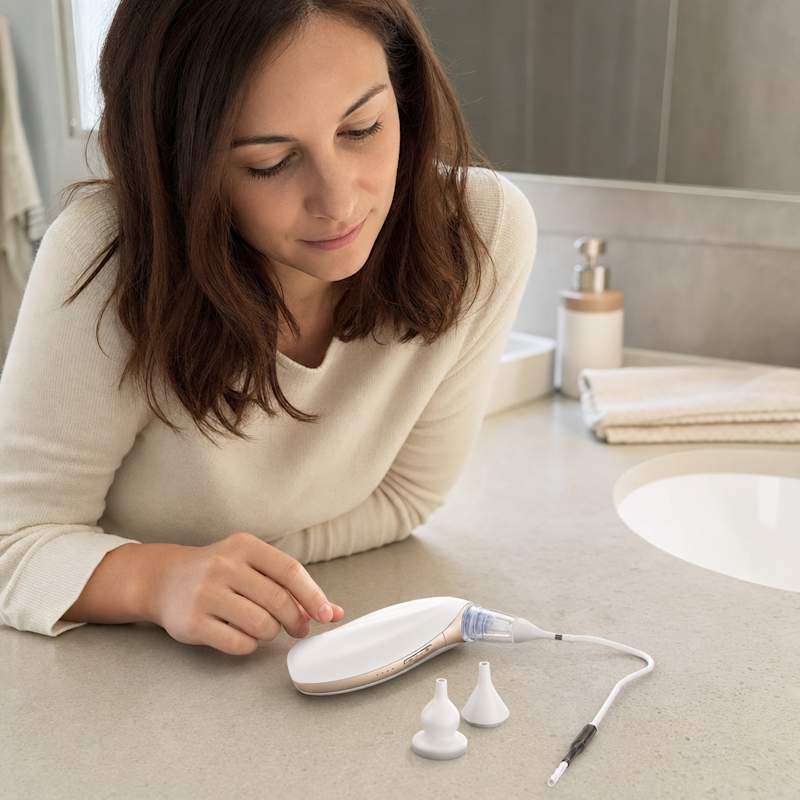
This is the gap Vacurio was actually built to close — not by promising more suction than anyone else, but by rethinking what the tool needs to do well.
It's a cordless, rechargeable 2-in-1 vacuum-style cleaner (ear and nose) with 3 adjustable suction levels — so you control the intensity instead of fighting a single fixed setting — paired with soft, washable silicone tips that come in multiple shapes and sizes (3 nozzle shapes plus 2 spiral tips) specifically to answer the "even the smallest tip is too big" complaint that shows up over and over in this category. The head is transparent, so instead of trusting a claim, you watch what actually comes out, right there in the clear chamber. The mechanism is simple: gentle vacuum pressure lifts wax and water out of the ear canal, rather than pressing anything deeper the way a rigid swab does — backed by a 90-day window to find that out for yourself.
What to Verify Before You Buy
Check for visibility
If a listing can't show you what actually comes out, you're buying on faith.
Check the tip options
"One size fits all" is usually code for "fits almost no one perfectly."
Check the return window
A 30-day window barely covers a trial; a 90-day window says the maker expects it to hold up.
Pre-Purchase Proof

If you're still weighing this — still not sure whether a $69.99 device is worth it over the $10–$50 gadgets crowding the same search results — here's what's actually verifiable right now, before you spend anything.
Start with the guarantee: 90 days, money-back, which is three times the typical 30-day window this category usually offers. That's not a marketing flourish — it's a real signal about what the maker expects you to discover when you actually use it for a full season, not just the first week.
Then there's the math a lot of researchers land on once they price out the alternative. A single professional ear-cleaning visit — MinuteClinic-style — typically runs $99–$139, and can climb toward $250 without insurance. One device, used for years, costs less than a single one of those appointments.
"We use it after every shower to get rid of trapped water… It sure will help during the summer after swimming."— Verified buyer review
That's not a manufacturer claim. That's the one thing people who are skeptical about suction-based ear tools still hand credit to. It's a small, verifiable, unglamorous promise — which, in a category full of overblown ones, is exactly what makes it trustworthy. See the full routine and reviews
"How Do I Know This One Actually Has Real Suction?"

It's the right question — that exact complaint is the single most common one in this category, and pretending otherwise would be dishonest.
The honest answer: Vacurio isn't built to rip out hardened, impacted wax — no gentle vacuum tool honestly is, and anything that claims otherwise deserves your skepticism. It's built for trapped water, loose surface wax, and everyday upkeep, with 3 adjustable levels so you find the setting that actually moves something for you, and a transparent chamber so you watch it happen instead of hoping.
And if it doesn't? You've got 90 days to find that out and send it back — plenty of time to actually test it against your own routine, not a rushed weekend trial.